• Marceline – Large French Bicolour Beefsteak Tomato | Vertiloom
  • Marceline – Large French Bicolour Beefsteak Tomato | Vertiloom
  • Marceline – Large French Bicolour Beefsteak Tomato | Vertiloom
  • Marceline – Large French Bicolour Beefsteak Tomato | Vertiloom

Marceline – Large French Bicolour Beefsteak Tomato | Vertiloom

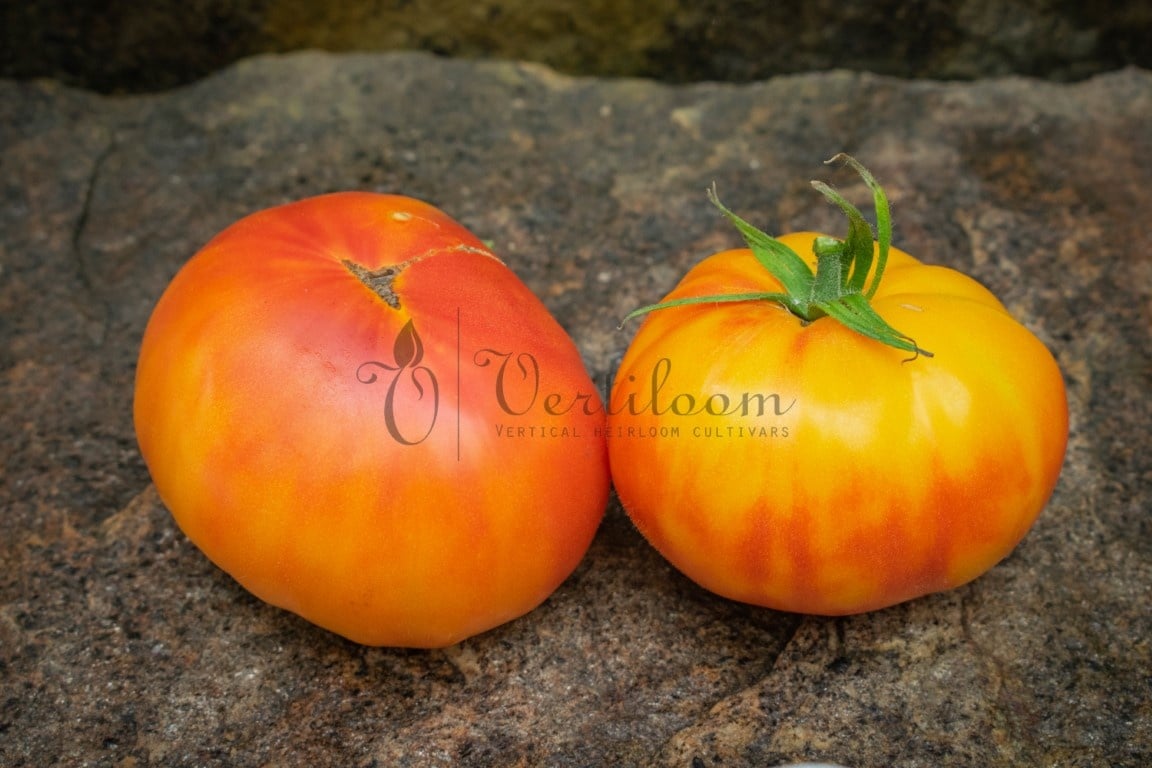
  • Rare French variety bred by Marcel Monfort in 2008, from Pineapple × Russian. Large yellow-orange beefsteak tomatoes of 300–500 g with red highlights. Juicy, meaty flesh and a delicious fruity flavour. Vigorous plants with abundant midseason harvests.
  • Article number: *
  • Not yet rated : Add your review
  • € 2,00 Incl. tax Excl. Shipping costs

  • wishlist : or compare:
  • Availability: In stock

Reviews

0 stars based on 0 reviews Add your review

Information

Marceline

  • A rare French creation: Marceline is a little-known tomato variety developed in 2008 by Marcel Monfort from Savoie, France. It originated from a cross between Pineapple and Russian, combining the attractive colours and flavour characteristics of large bicolour beefsteak tomatoes.
  • Large fruits in warm colours: The round, flattened beefsteak tomatoes generally weigh between 300 and 500 grams and often show pronounced ribbing around the shoulders. Their skin combines golden-yellow and orange tones with red highlights. When sliced, they reveal beautiful yellow-orange flesh marbled with red.
  • Juicy flesh with a rich flavour: Marceline has a firm, meaty texture while remaining wonderfully juicy. The flavour is rich, fruity and well balanced, with the pleasant sweetness characteristic of excellent bicolour beefsteak tomatoes. Delicious eaten fresh or served in thick slices.
  • Vigorous plants with strong development: The plants have an indeterminate growth habit, regular foliage and can reach approximately 2 metres in height. Their vigorous growth and the weight of the large fruits make sturdy support advisable.
  • Abundant harvests, even in cooler conditions: Marceline produces above-average, regular harvests from midseason onwards. For a variety bearing such large fruits, production begins relatively early. It is also well adapted to cooler growing conditions, making it particularly interesting for temperate climates.

Scroll To Top
Please accept cookies to help us improve this website Is this OK? Yes No More on cookies »