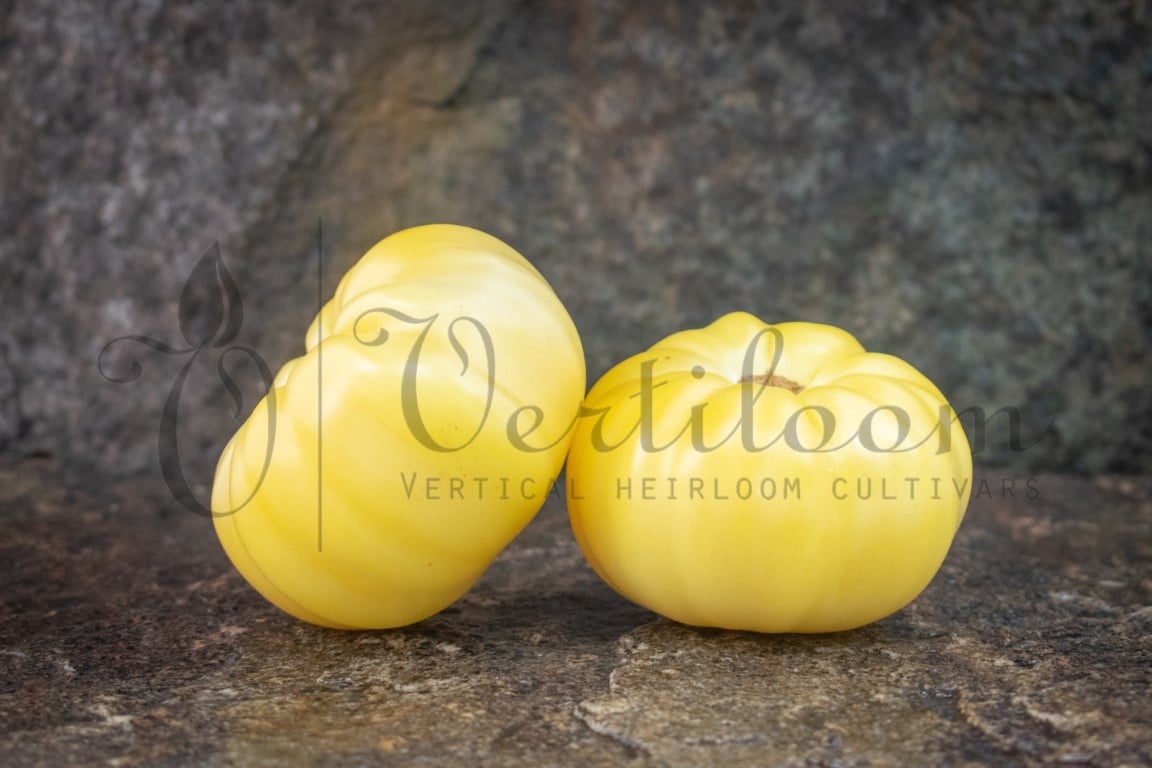
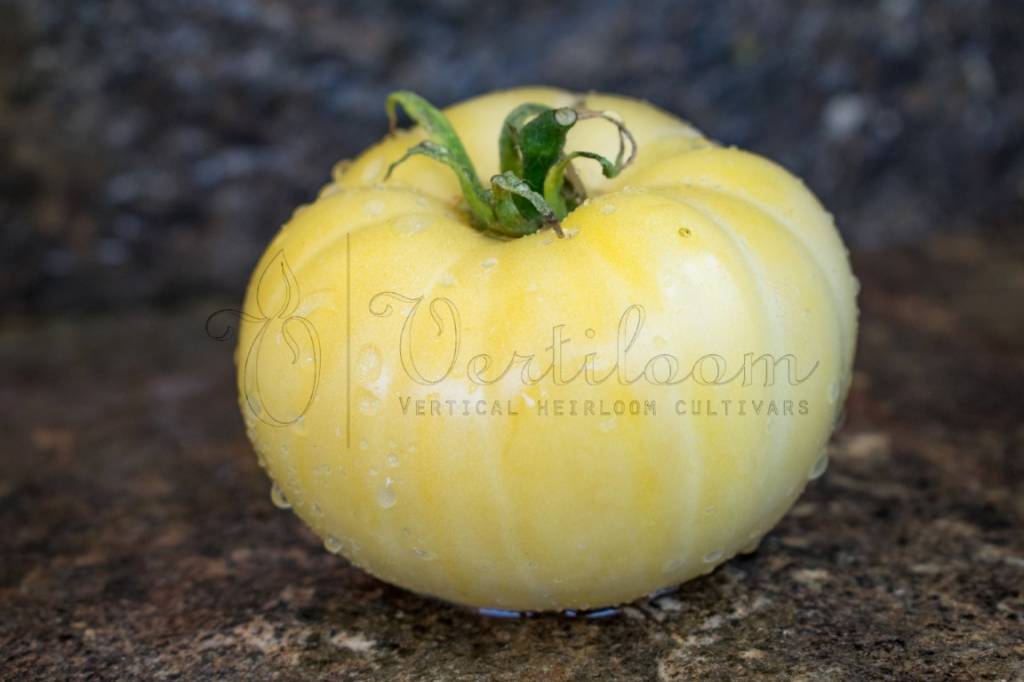
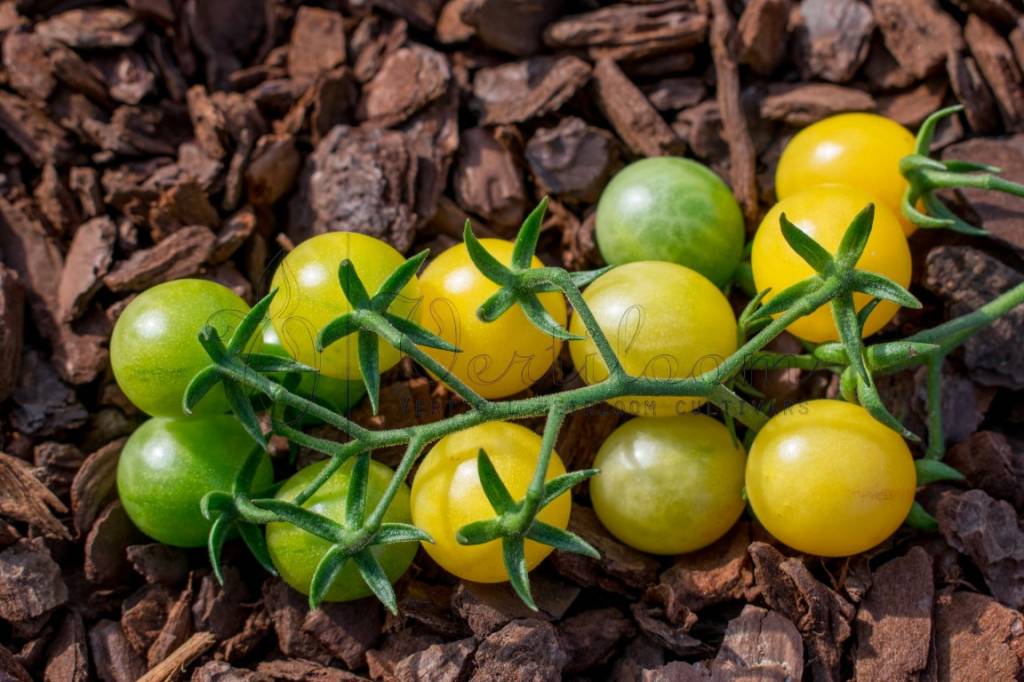
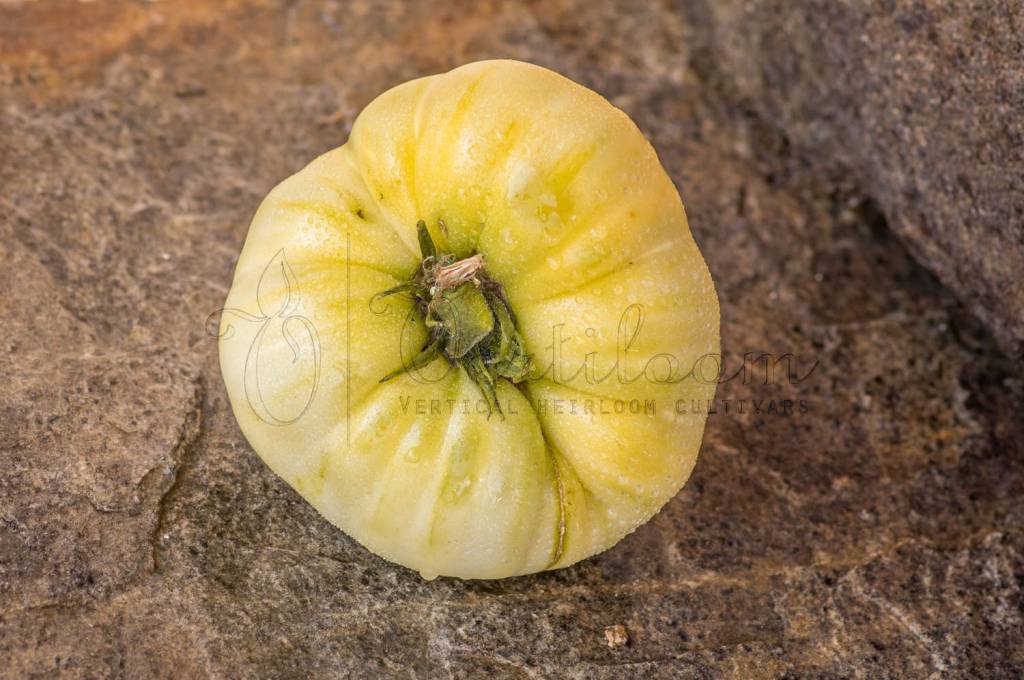
White tomatoes are among the most unusual and elegant varieties in the remarkable world of tomatoes. Their delicate colours range from almost translucent ivory to warm creamy yellow, sometimes with a subtle golden or pinkish blush. At Vertiloom, you can discover a diverse collection of white tomatoes, from small, sweet cherry varieties to impressive beefsteaks with tender, juicy flesh.
Their understated colours are precisely what makes these tomatoes so distinctive. Alongside red, yellow, green and dark-coloured varieties, they create a beautiful contrast in the garden, greenhouse and on the plate.
The name white tomatoes can be somewhat misleading. Very few varieties remain truly pure white when fully ripe. Most develop ivory, creamy-white or pale-yellow colouring.
Some fruits retain an almost translucent appearance, while others become noticeably warmer and more yellow as they mature. Depending on the variety, a delicate pinkish blush may also appear.
White tomatoes come in different shapes and sizes, including small cherry tomatoes, round salad varieties and large, sometimes flattened or slightly ribbed beefsteaks.
Their textures are equally diverse. Some have firm, juicy flesh, while others are exceptionally tender, meaty and finely textured.
The unusual colouring of white tomatoes results from the way natural pigments develop during ripening.
In red tomatoes, the accumulation of lycopene is largely responsible for the familiar red colour. White-fruited tomatoes develop their pigments differently. Many accumulate relatively small amounts of carotenoids, allowing the flesh to remain exceptionally pale.
The final appearance also depends on skin pigmentation. Nearly colourless skin over pale flesh can give a very different effect from skin with a faint yellow tint.
Fruit colour is an inherited characteristic of the variety. White tomatoes are therefore not unripe or faded red tomatoes, but distinctive varieties that naturally develop pale colours at maturity.
White tomatoes are often appreciated for their gentle, pleasant and sometimes remarkably sweet flavours.
Some varieties have delicate, fruity aromas, while others develop a richer tomato flavour with a subtle, refreshing acidity.
Their taste may seem less sharp than that of certain red varieties. However, a pale fruit colour does not automatically mean that a tomato contains less acid or more sugar.
The final flavour depends on the balance of sugars, acids and aromatic compounds, together with ripeness and growing conditions.
Texture also contributes to the eating experience. Small white cherry tomatoes can be juicy and sweet, while larger beefsteaks often have a tender, almost creamy consistency.
White and pale-yellow tomatoes can look remarkably similar. Particularly at full maturity, the distinction is not always obvious.
White tomatoes generally remain ivory, creamy white or very pale yellow. In many varieties, the flesh contains relatively low amounts of colour pigments.
Yellow tomatoes usually develop more noticeable yellow colouring, ranging from bright lemon yellow to rich golden shades.
The boundary between these groups is not equally clear in every variety. Some white tomatoes develop increasingly warm, yellowish tones as they ripen.
The characteristic ripe appearance of each individual variety is therefore more important than a strict general distinction based on colour alone.
This unusual colour group includes historical heirlooms and more recent selections.
Some well-known examples are:
White Beauty: a historical tomato variety with creamy-white to ivory, slightly flattened fruits and pale flesh.
White Tomesol: a distinctive pale-coloured beefsteak with creamy-white to light-yellow fruits that may develop a delicate pink blush as they ripen.
Great White: a large beefsteak tomato with pale ivory to creamy-yellow colouring and tender, meaty flesh.
Snow White: a small cherry tomato with light ivory to creamy-yellow fruits and a pleasantly sweet flavour.
These examples illustrate the diversity of white tomatoes. Numerous lesser-known varieties offer their own distinctive origins, fruit shapes and flavour profiles.
Determining the right harvesting moment can be more challenging with white tomatoes than with red or orange varieties. Their fruits remain pale, and changes in appearance are often subtle.
Look for several signs:
Warmer colouring: many white tomatoes change from pale green or greenish white to ivory, cream or light yellow.
Slight softness: ripe fruits generally yield gently to light pressure without becoming mushy.
A delicate blush: some varieties develop faint yellow, golden or pinkish tones.
Variety-specific characteristics: certain white tomatoes remain exceptionally pale, while others become noticeably more yellow when fully ripe.
An ivory or creamy-yellow appearance does not indicate exactly the same stage of ripeness in every variety. Regularly observing the fruits makes these subtle changes easier to recognise.
White tomatoes are cultivated in much the same way as other tomato varieties. They thrive with adequate warmth, light, fertile soil and consistent watering.
Growth habit depends on the variety. Many large white beefsteaks are tall, indeterminate plants requiring sturdy support, although smaller and more compact varieties also exist.
Heavy fruit clusters on large-fruited varieties benefit from additional support.
Balanced foliage helps protect tomatoes from excessive sunlight and sunscald. On very pale fruits, damage and discolouration can be particularly noticeable.
Ripening time, productivity and mature fruit size also vary between varieties.
Their delicate, elegant colours make white tomatoes especially attractive in fresh dishes.
Small white cherry tomatoes are a surprising addition to salads and mixed tomato platters. Paired with red, green, yellow or dark-coloured tomatoes, their pale shades create a beautiful contrast.
Larger white beefsteaks are particularly appealing when sliced for sandwiches, salads and other fresh preparations.
Depending on their flavour and texture, white tomatoes can also be used in light-coloured salsas, sauces and soups. They offer a distinctive appearance, especially in dishes where their natural pale colour is preserved.
From small, almost translucent cherry tomatoes to large ivory-white beefsteaks, white tomatoes form a remarkable and elegant group within the extraordinary diversity of tomatoes.
At Vertiloom, explore white tomato seeds from familiar and rare varieties, each with its own origin, fruit shape, flavour and growth habit.
Discover their beautiful, subtle colours and find the white tomato varieties that best suit your garden, greenhouse and personal taste.