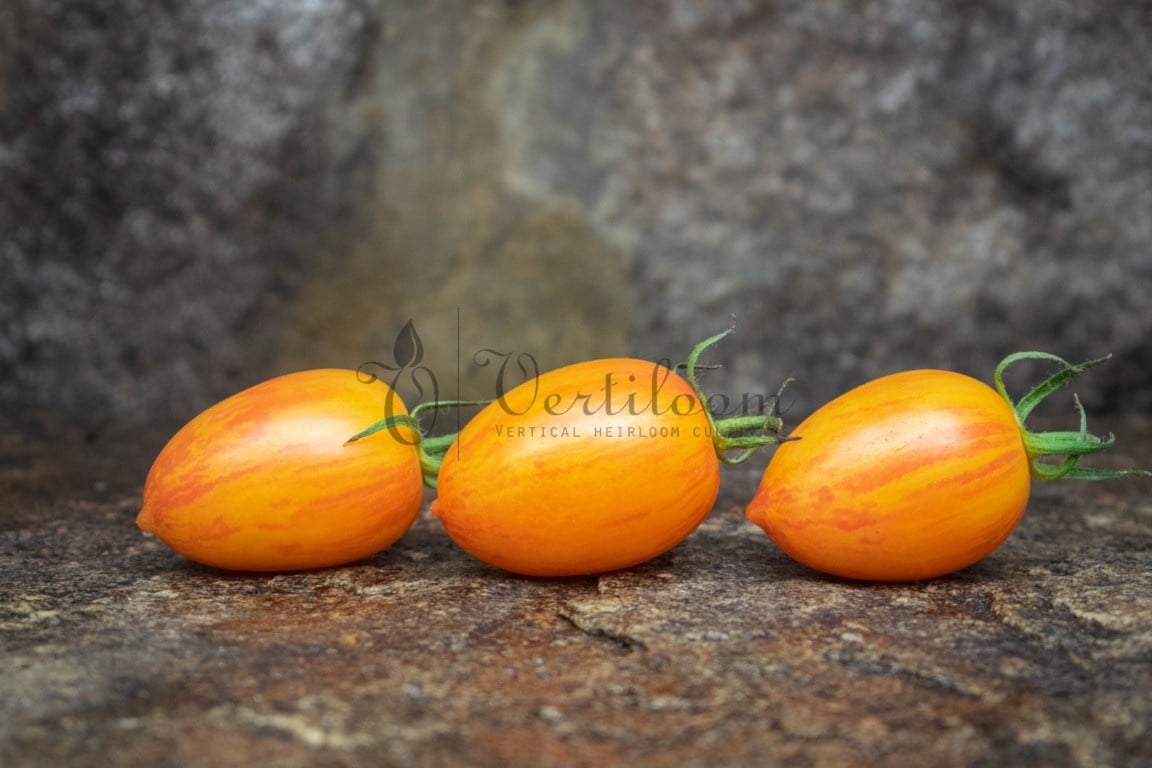
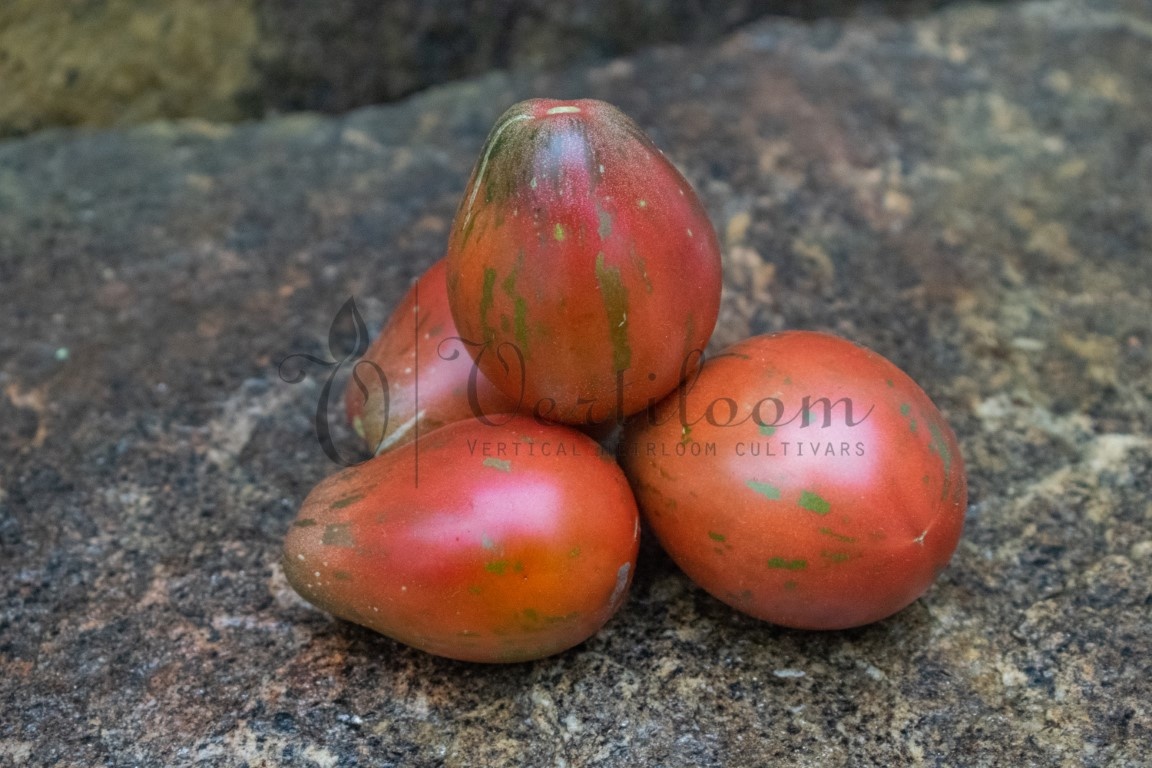
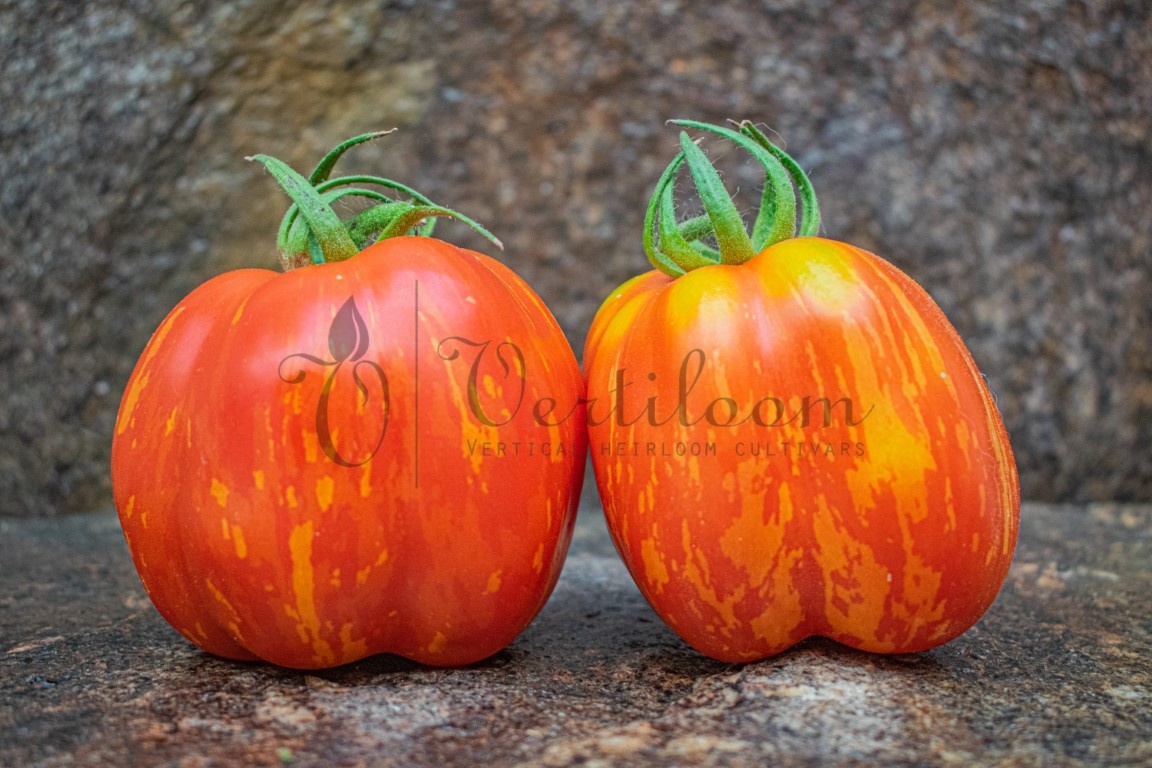
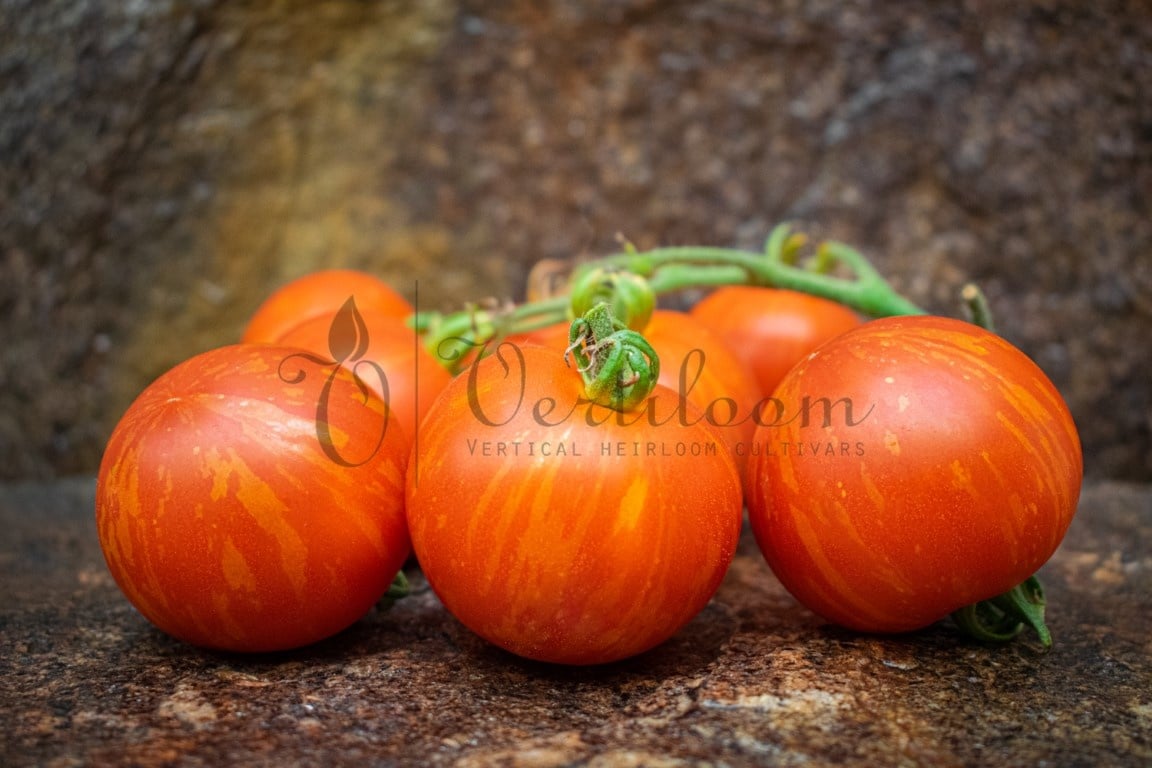
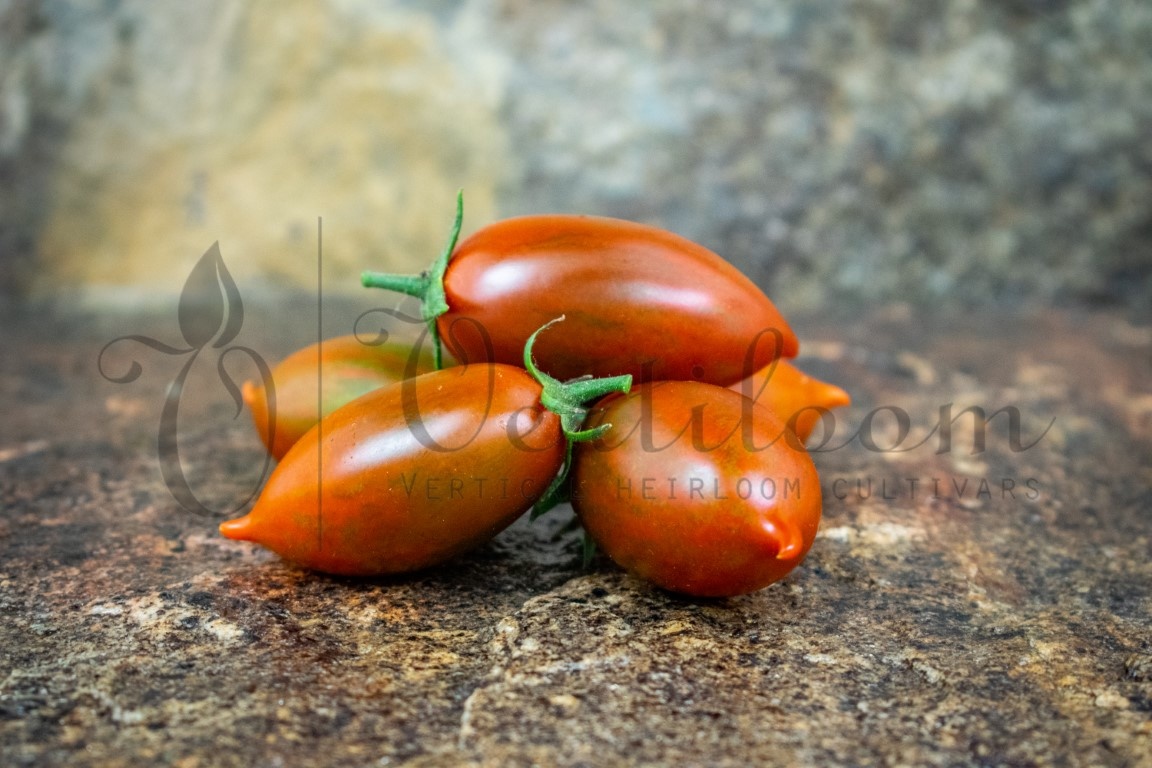
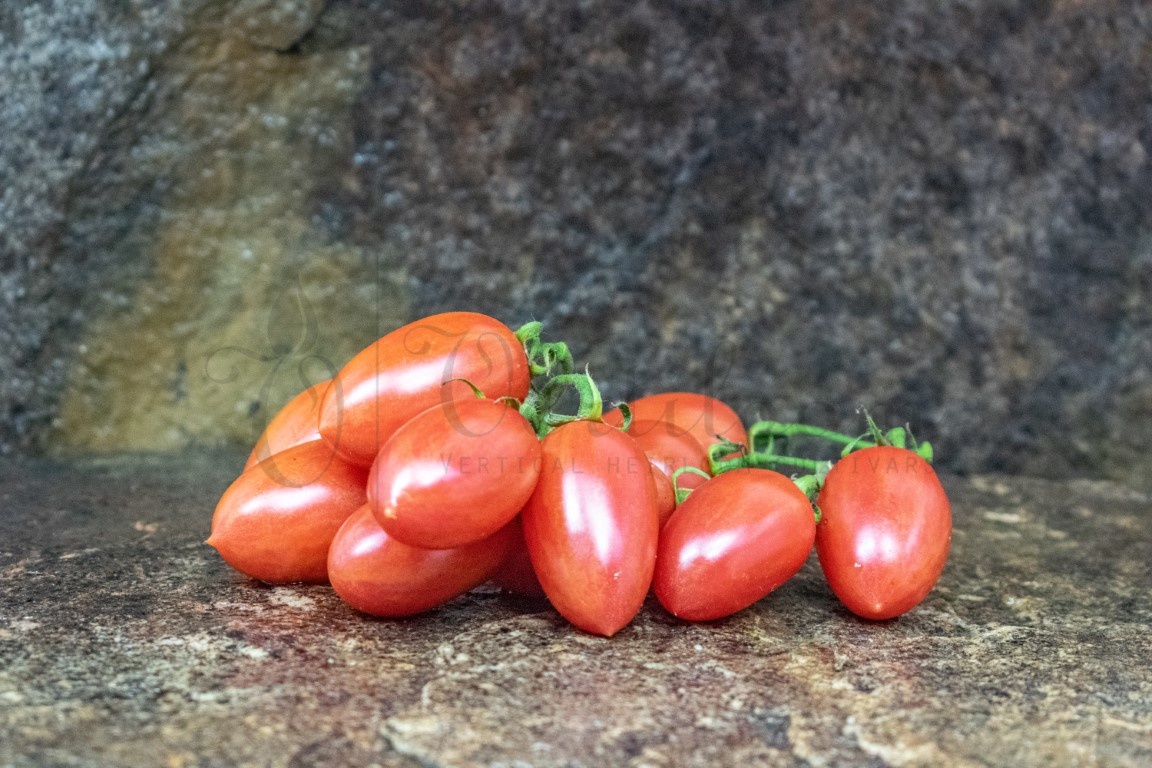
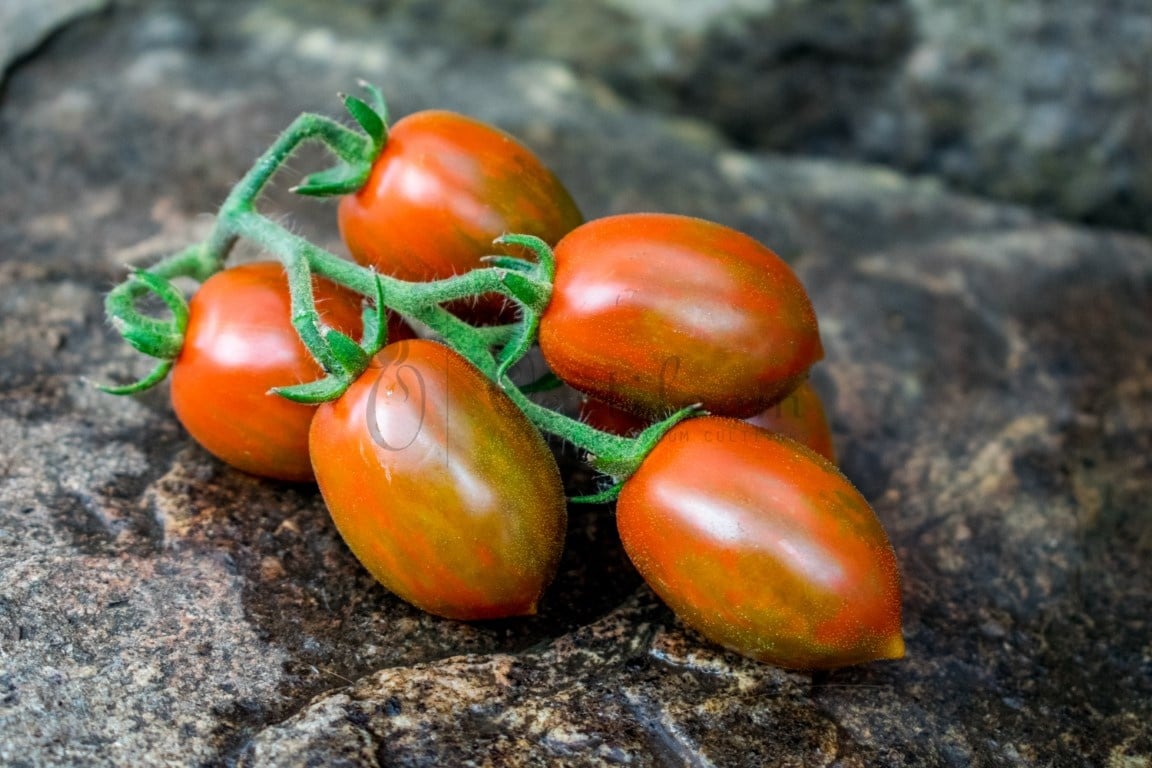
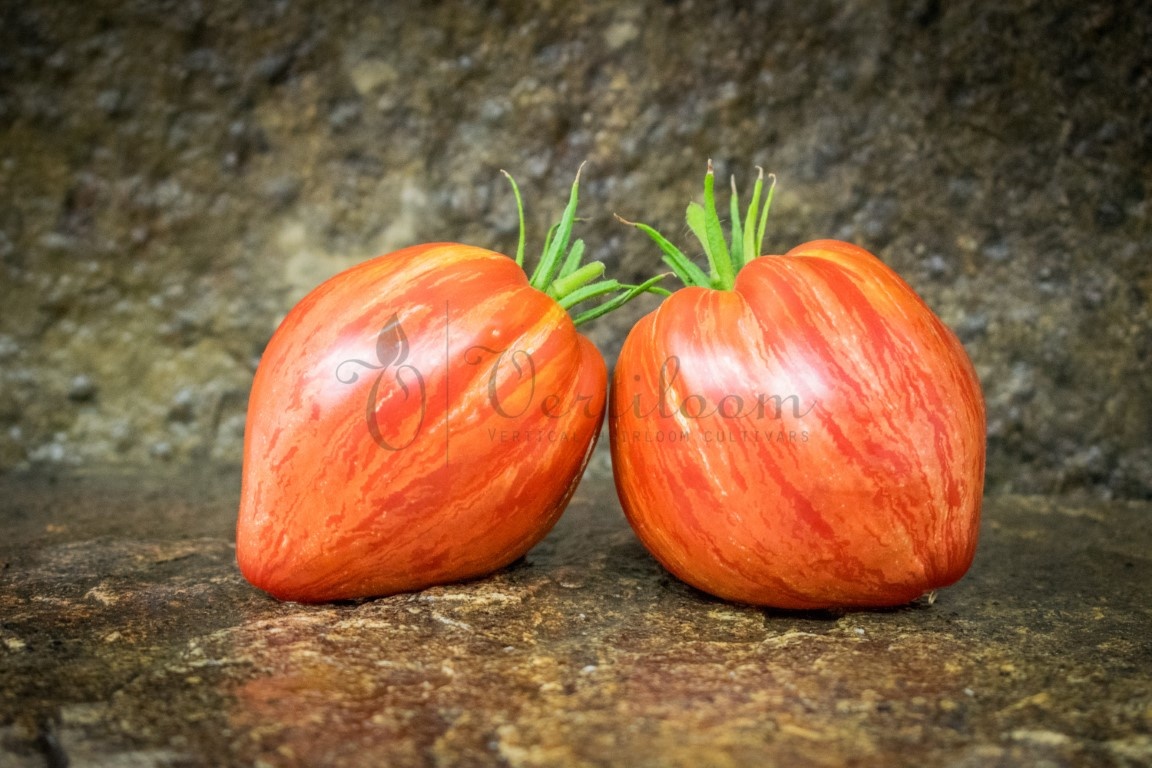
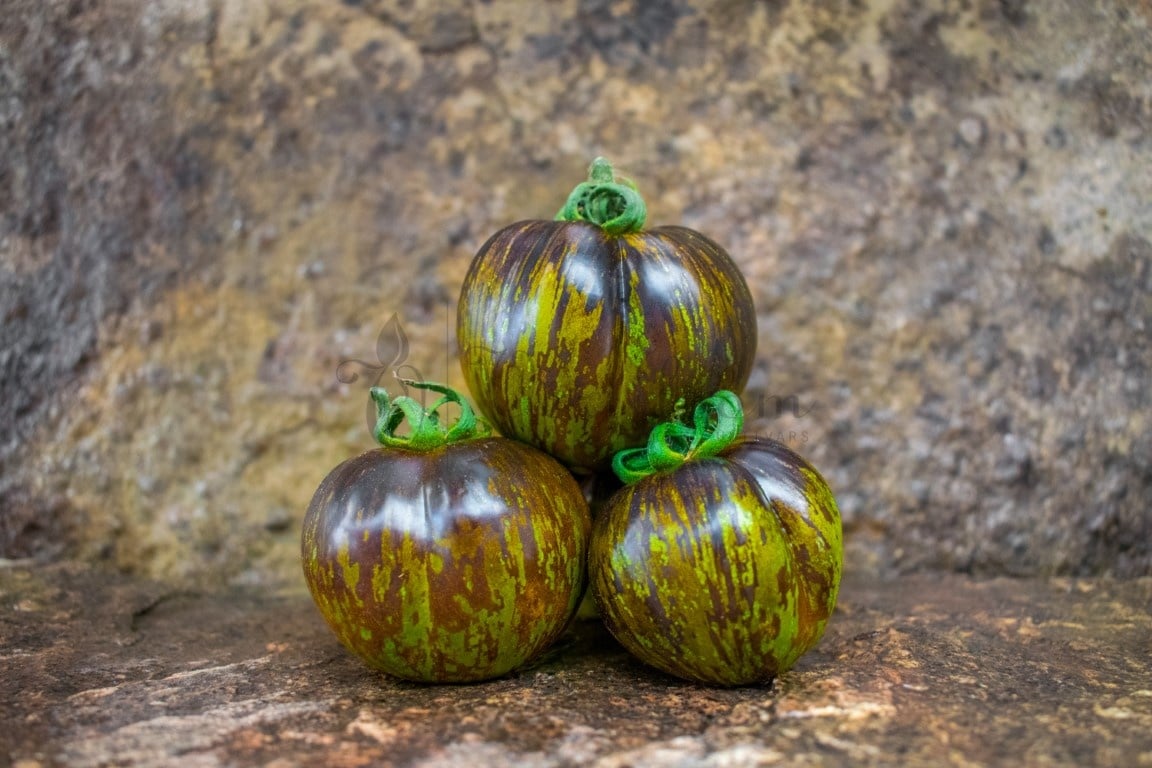
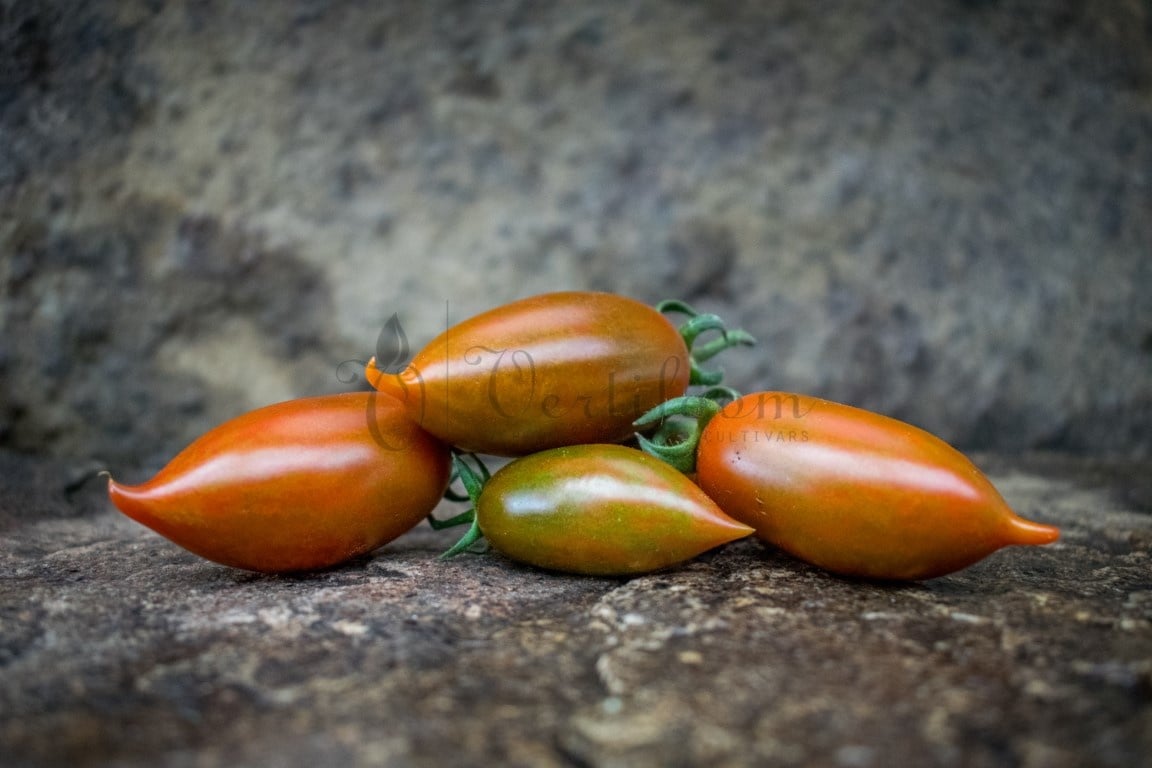
Striped tomatoes are among the most eye-catching and decorative varieties in the remarkable world of tomatoes. Their distinctive patterns range from delicate golden lines to broad green, red or dark-coloured stripes running across the fruit. At Vertiloom, you can explore an extensive collection of striped tomatoes, from small, colourful cherry tomatoes to impressive striped beefsteaks.
One of their most appealing characteristics is the variation in their markings. Even fruits from the same variety can display slightly different patterns, creating a wonderful combination of colour, shape and flavour.
What Are Striped Tomatoes?
Striped tomatoes are varieties whose skin displays a recognisable pattern of stripes or bands. These generally run lengthwise from the stem towards the blossom end, although they may be straight, irregular, narrow or broad, depending on the variety.
Their colour combinations are remarkably diverse. Some green tomatoes develop pale-green or golden stripes, while red varieties may show yellow or orange bands. Darker tomatoes can display contrasting green, bronze or almost black markings.
Certain varieties already show their stripes when the fruits are immature, while others develop their most striking contrasts as they ripen.
Why Do Some Tomatoes Have Stripes?
The distinctive patterns are primarily the result of inherited characteristics that influence the formation and distribution of natural pigments.
In traditional green-striped tomatoes, differences in the concentration and breakdown of chlorophyll play an important role. Some areas of the skin retain their green pigmentation longer than others, creating attractive contrasts during ripening.
Other varieties develop yellow, red, pink or darker patterns through different combinations of pigments.
Ripeness and growing conditions can influence the intensity and final appearance of these colours, while the characteristic striped pattern itself is a varietal trait.
Striped Tomatoes and Bicolor Tomatoes: What Is the Difference?
Striped and bicolor tomatoes sometimes look similar, but the terms describe different characteristics.
With striped tomatoes, the emphasis is on the visible lines or bands on the skin. The flesh may be predominantly one colour.
Bicolor and multicolor tomatoes display two or more colours, frequently within the flesh itself. Large bicolor beefsteaks, for example, may reveal beautiful red and yellow marbling when sliced.
Some varieties combine both characteristics and are therefore striped as well as multicoloured.
What Do Striped Tomatoes Taste Like?
Striped tomatoes do not have a particular flavour simply because of their appearance.
Some varieties are exceptionally sweet and fruity, while others offer refreshing acidity, a rich tomato aroma or a pleasant balance of sweetness and tanginess.
Texture varies too. Small cherry tomatoes may be crisp and juicy, while larger beefsteaks often have softer, meatier flesh.
This diversity makes striped tomatoes attractive not only for their colourful appearance but also for discovering distinctive flavours.
Well-Known Striped Tomato Varieties
The world of striped tomatoes includes numerous traditional and modern varieties. Well-known examples include:
-
Green Zebra: a distinctive green-when-ripe tomato with dark green stripes contrasting against a lighter yellow-green background at maturity.
-
Tigerella: a popular tomato that ripens red to orange-red, decorated with lighter golden-yellow or orange stripes.
-
Pink Berkeley Tie Dye: an unusual, often larger tomato with greenish stripes over a deep pink to purplish-red background.
-
Sunrise Bumble Bee: an attractive small tomato displaying yellow, orange-red and striped colouring.
These varieties demonstrate the remarkable diversity of striped patterns. Many lesser-known tomatoes offer equally interesting combinations of colour, fruit shape and flavour.
How Can You Tell When a Striped Tomato Is Ripe?
Stripes can provide useful clues about ripeness, but their colour changes differ between varieties.
Look for several characteristics:
-
Background colour: the fruit gradually develops the underlying ripe colour typical of its variety.
-
Stripe colour: on some tomatoes green stripes become lighter or more yellow, while on others pale bands contrast more strongly with a red or dark background.
-
Slight softness: ripe tomatoes generally yield gently to light pressure.
-
Variety-specific appearance: some tomatoes retain prominent green stripes even when completely ripe.
For green-when-ripe striped tomatoes in particular, checking both colour and firmness can help identify the right harvesting moment.
Growing Striped Tomatoes
Striped tomatoes have much the same growing requirements as other tomato varieties. They appreciate warmth, adequate light, fertile soil and consistent watering.
Growth habit depends on the variety. Some are tall, indeterminate plants requiring sturdy support, while others remain relatively compact.
Fruit size, ripening time and yield also vary considerably. The presence of stripes does not in itself determine plant vigour or productivity.
Balanced foliage helps protect the fruits from excessive sunlight, while good air circulation remains important for healthy growth.
Striped Tomatoes in the Kitchen
Their striking patterns make striped tomatoes particularly attractive in fresh dishes.
Small striped cherry tomatoes add playful colours to salads and tomato platters. Larger fruits are wonderful when sliced thickly for sandwiches, salads and other fresh preparations.
Depending on their flavour and texture, they can also be used in salsas, sauces and cooked dishes.
To appreciate their beautiful markings, striped tomatoes are especially appealing when served fresh with their skin intact.
Discover Vertiloom's Striped Tomato Collection
From green tomatoes with golden stripes to red-orange, pink and dark-coloured varieties with remarkable patterns, striped tomatoes bring a wonderful diversity of colours to the garden and greenhouse.
Explore our collection of striped tomato seeds and discover varieties that appeal to you through their distinctive markings, flavours, fruit shapes and growth habits.