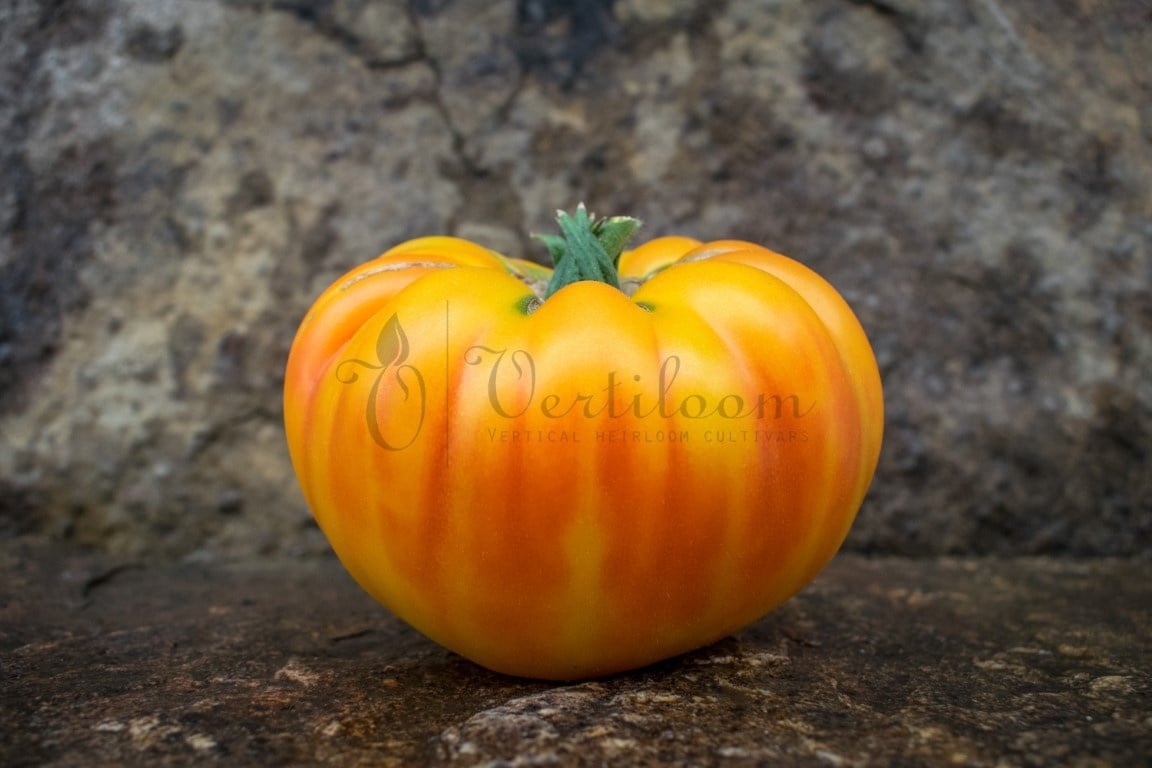
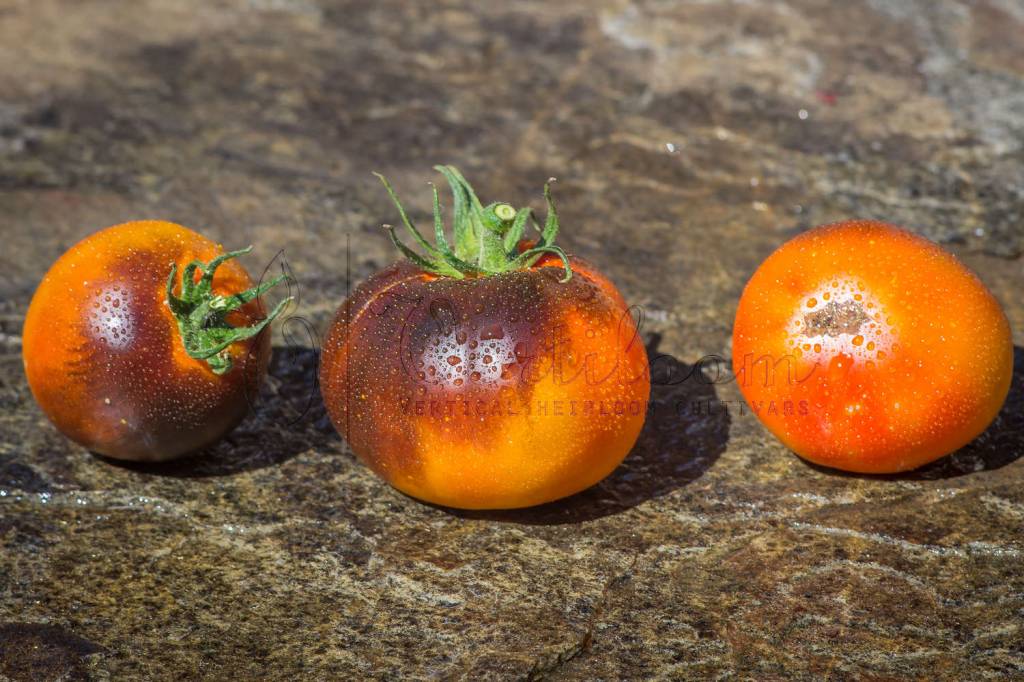
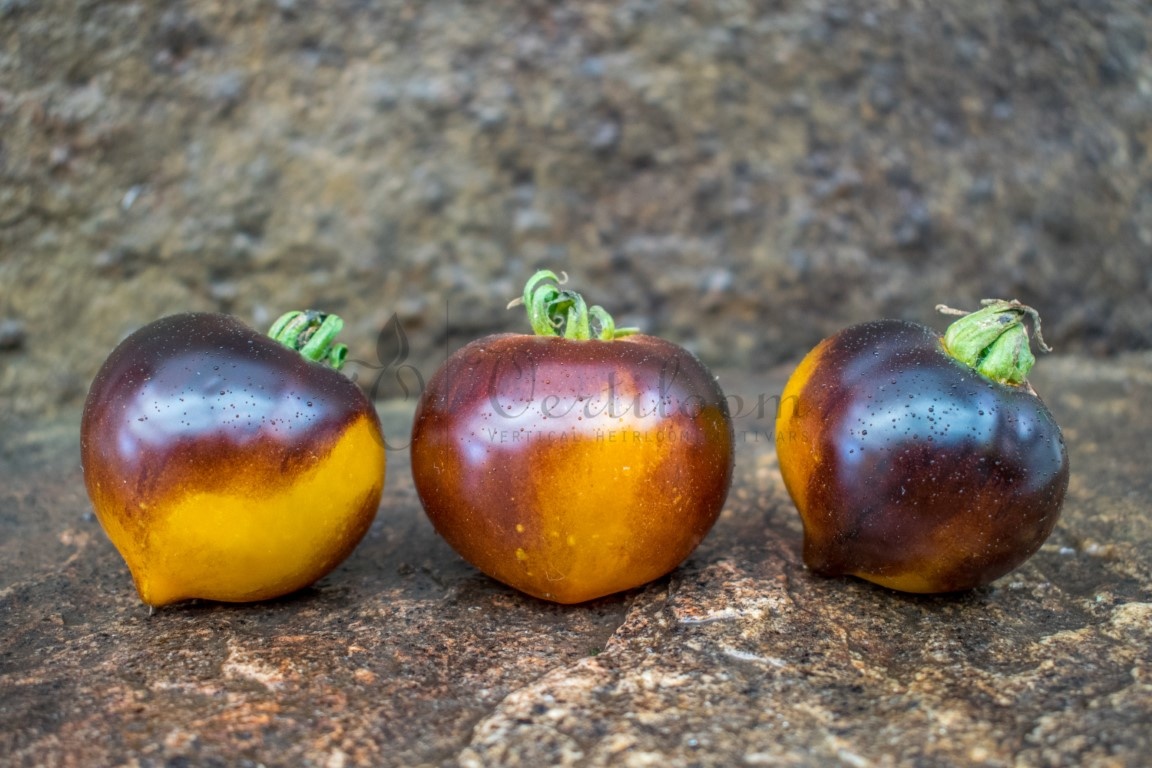
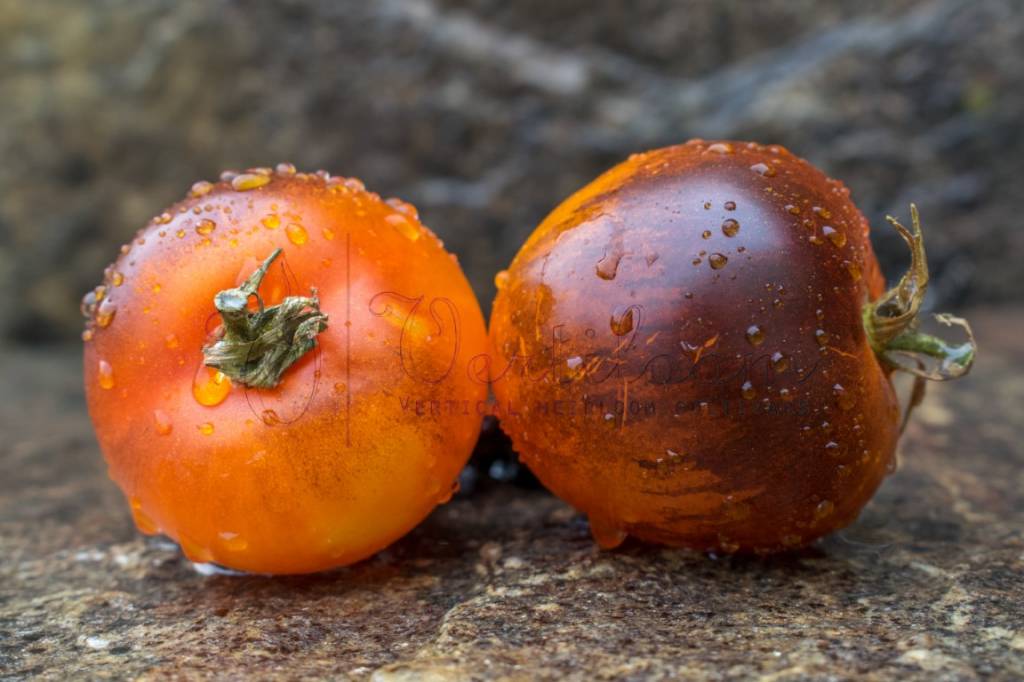
Orange tomatoes bring warmth and vibrant colour to the vegetable garden and greenhouse. Their shades range from soft apricot and bright tangerine to rich, deep orange, making them particularly attractive among unusual tomato varieties. At Vertiloom, you can discover an extensive collection of orange tomatoes, from small, sweet cherry varieties to impressive beefsteaks with rich, juicy flesh.
Beyond their beautiful appearance, orange tomatoes offer a remarkable diversity of flavours, fruit shapes and growth habits. Some varieties have been treasured for generations, while others are the result of more recent breeding.
Orange tomatoes come in a wide range of shapes and sizes. There are small, round cherry tomatoes, medium-sized salad varieties, elongated fruits and large, flattened or ribbed beefsteaks.
Their colours also vary considerably. Some develop a delicate apricot tone, while others ripen to a deep shade approaching tangerine-red.
Many varieties have orange flesh as well, although the precise shade and texture differ. Some tomatoes are exceptionally juicy and tender, while others are firmer and distinctly meaty.
The orange colour of tomatoes comes from natural pigments belonging to the carotenoid family.
In red tomatoes, lycopene plays an important role in determining the ripe fruit colour. Orange tomatoes may develop different pigment balances, producing their characteristic warm appearance.
Several genetic mechanisms can produce orange fruit. Some varieties accumulate relatively high amounts of beta-carotene, while others contain particular orange-coloured forms of lycopene, such as prolycopene.
Consequently, two tomatoes with similar orange colouring may have quite different pigment compositions.
Fruit colour is an inherited characteristic, although ripeness and growing conditions can influence its final intensity.
Orange tomatoes are often appreciated for their rich, pleasant and fruity flavours. Many varieties combine gentle sweetness with balanced acidity, creating a smooth, rounded taste.
Large orange beefsteaks can offer particularly rich flavours, sometimes with an almost creamy impression. Small orange cherry tomatoes may be intensely sweet, juicy and aromatic.
However, not every orange tomato tastes the same. Some varieties are mild and delicate, while others offer refreshing acidity or a pronounced traditional tomato flavour.
The final flavour depends on the balance of sugars, acids and aromatic compounds, as well as ripeness and growing conditions.
Yellow and orange tomatoes can sometimes be difficult to distinguish by colour alone. Deep golden-yellow varieties may develop a distinctly warm, orange-like appearance when fully ripe.
Yellow tomatoes generally show lighter pigmentation, ranging from pale lemon yellow to rich golden shades.
Orange tomatoes develop warmer, deeper colouring through different combinations and proportions of carotenoid pigments.
The boundary between golden yellow and pale orange is not equally clear in every variety. The characteristic ripe colour of the individual cultivar is therefore particularly important.
Orange colouring does not automatically mean that a tomato is sweeter, less acidic or more nutritious than a yellow or red variety.
Orange tomatoes offer a diverse selection of fruit types:
Orange cherry tomatoes: small, often juicy fruits with a wide range of sweet and fruity flavours.
Orange salad tomatoes: medium-sized varieties well suited to fresh dishes and colourful salads.
Orange beefsteak tomatoes: large, frequently meaty fruits with tender flesh and rich flavour.
Orange oxheart tomatoes: distinctive heart-shaped tomatoes, sometimes with particularly fine, dense flesh.
Orange bush and dwarf tomatoes: more compact varieties that may suit smaller gardens or containers, depending on their growth characteristics.
Fruit colour alone does not determine plant size, maturity time or productivity.
The world of orange tomatoes includes treasured historical heirlooms and interesting modern selections.
Some familiar examples are:
Kellogg's Breakfast: an impressive American beefsteak variety producing large, deep-orange tomatoes with substantial, meaty flesh.
Amana Orange: a large, often flattened orange beefsteak with juicy flesh and a rich, pleasant flavour.
Jaune Flammée: a French variety producing small to medium-sized, intensely orange tomatoes appreciated for their juicy, fruity character.
Nebraska Wedding: a historical American variety with rounded, beautifully orange fruits and a characteristic, balanced tomato flavour.
Beyond these well-known names, numerous lesser-known orange tomato varieties offer unusual origins, shapes and flavours.
Colour development is an important sign of ripeness in orange tomatoes. The fruits gradually change from green to their characteristic orange shade.
However, the final ripe appearance varies between varieties.
Look for several characteristics:
Typical ripe colour: the fruit develops its characteristic apricot, tangerine or deep-orange shade.
Slight softness: ripe tomatoes generally yield gently to light pressure without feeling mushy.
Even colour development: the original green background gradually disappears, although some varieties may retain green colouring near the stem for longer.
Fruit texture: certain varieties remain relatively firm, while others become noticeably softer at full maturity.
A pale-orange tomato may already be perfectly ripe in one variety, while another reaches its best maturity only after developing a deeper colour.
Orange tomatoes have much the same growing requirements as other tomato varieties. They thrive with adequate warmth, light, fertile soil and consistent watering.
Growth habit depends on the variety. Many large orange beefsteaks are tall, indeterminate plants requiring sturdy support. Smaller orange tomatoes may also be indeterminate, although bushy and compact varieties exist.
For large-fruited varieties, supporting heavy fruit clusters is particularly important.
Balanced foliage protects tomatoes from excessive sunlight, while good air circulation supports healthy growth.
Ripening time, yield and plant vigour also vary between individual cultivars.
Orange tomatoes are particularly attractive in salads and fresh dishes. Their warm colours contrast beautifully with red, green, yellow and dark-coloured tomatoes.
Small orange cherry tomatoes can be enjoyed straight from the plant and make lovely additions to mixed tomato platters.
Large orange beefsteaks are especially appealing when sliced thickly for sandwiches, salads and other fresh preparations.
Depending on the variety, orange tomatoes also work well in soups, salsas, sauces and chutneys. Fully orange varieties can bring a beautiful warm colour to these dishes.
From small, bright-orange cherry tomatoes to impressive beefsteaks with deep tangerine-coloured flesh, orange tomatoes form an exceptionally diverse group.
At Vertiloom, discover orange tomato seeds from both familiar and rare varieties, each with its own origin, fruit shape, flavour and growth habit.
Explore their warm, vibrant colours and find the orange tomato varieties that best suit your garden, greenhouse and personal taste.