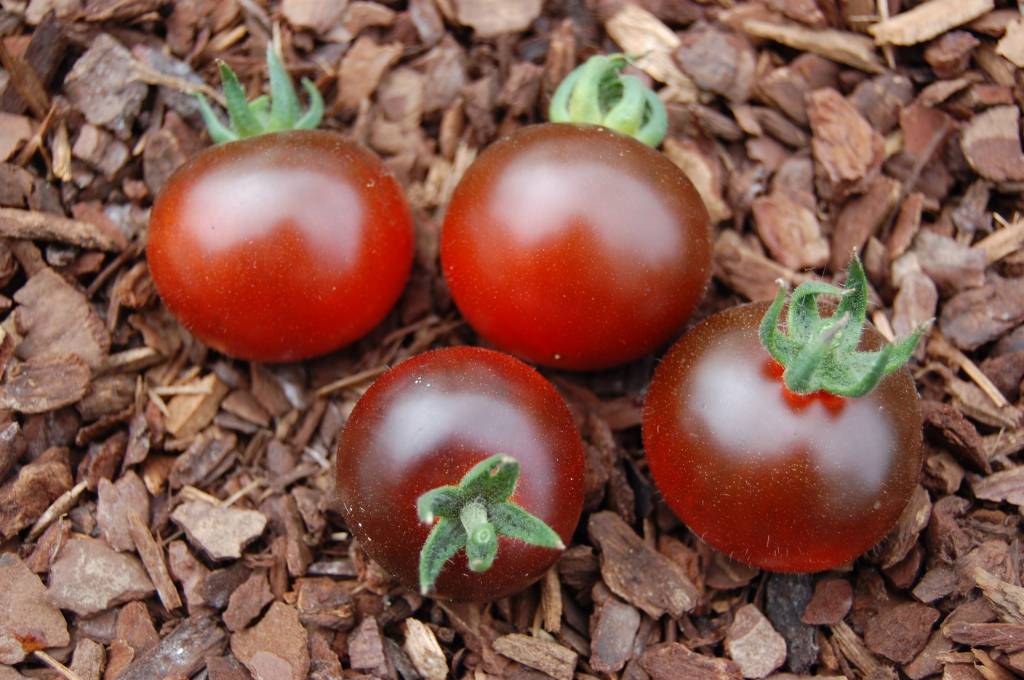
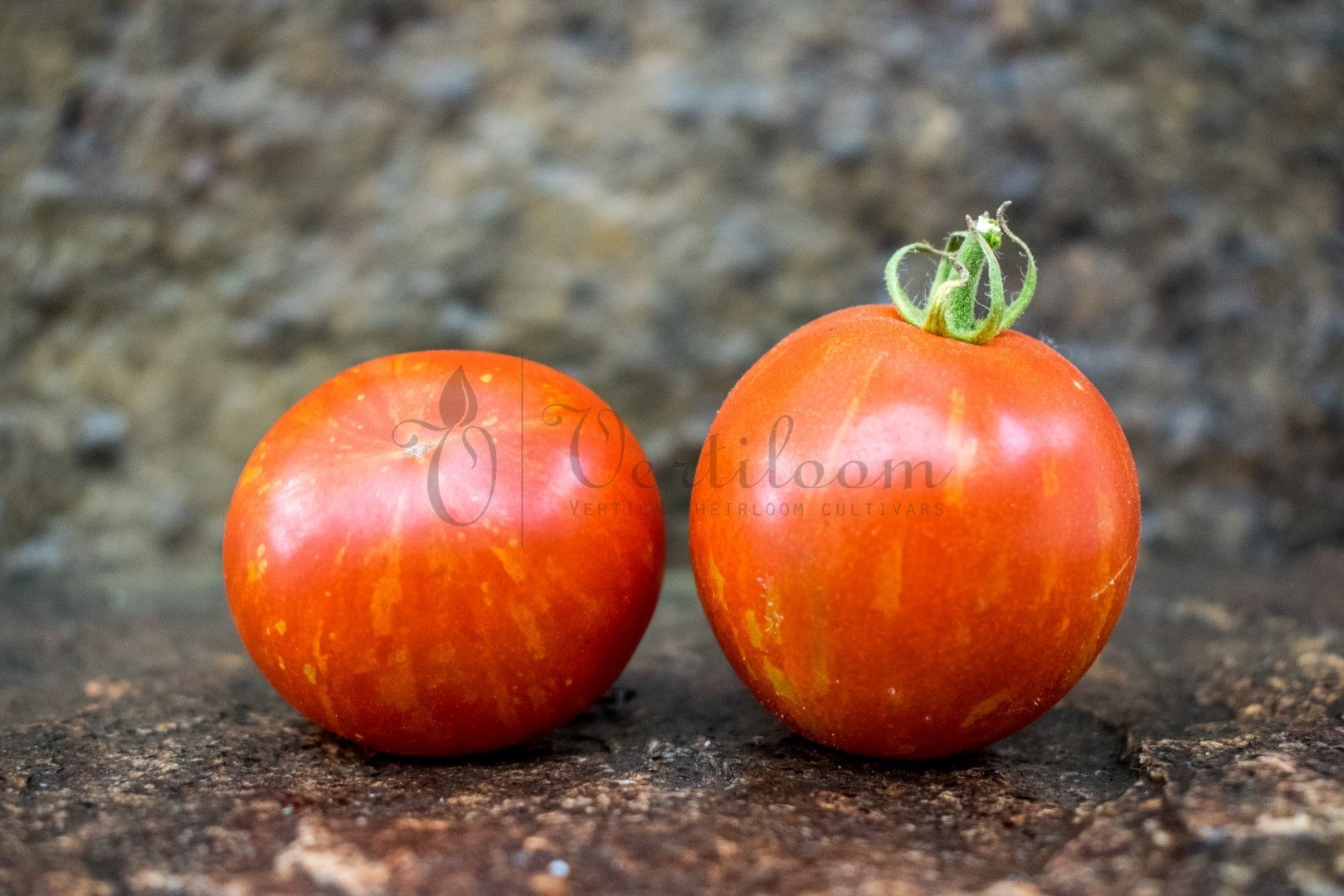
Red tomatoes may be the most familiar sight in the vegetable garden, but behind their classic colour lies an extraordinary diversity. From small, sweet cherry tomatoes to impressive beefsteaks and elongated paste tomatoes, their shapes, sizes, flavours and textures vary enormously. At Vertiloom, you can explore an extensive collection of red tomato varieties, including treasured heirlooms, rare cultivars and remarkable selections from different parts of the world.
What these tomatoes share is their distinctive red colour. Beyond that, every variety has its own character, history and qualities.
Red tomatoes come in an astonishing range of shapes and sizes. Some produce tiny, round fruits, while others develop large, flattened or deeply ribbed tomatoes. Elongated, oval, pear-shaped and heart-shaped red varieties are also found.
Their colour is not always identical. Depending on the variety, shades range from bright scarlet to deep crimson. Some tomatoes develop warm orange-red undertones, while others display an exceptionally rich red colour in both their skin and flesh.
Texture is equally varied, ranging from firm and meaty to tender, juicy or finely textured.
The characteristic red colour of ripe tomatoes is primarily caused by lycopene, a natural pigment belonging to the carotenoid family.
As tomatoes ripen, the green pigment chlorophyll gradually breaks down while other pigments become more prominent. In red-fruited varieties, lycopene accumulates, giving the fruit its familiar red appearance.
The final colour intensity is influenced by the variety's genetic characteristics, ripeness and growing conditions.
Not all red tomatoes contain the same amount of lycopene, and the appearance of their skin and flesh can vary between varieties.
Red tomatoes offer a much greater diversity of flavours than their familiar appearance might suggest.
Some varieties are exceptionally sweet and fruity, while others have a pronounced, rich tomato flavour with refreshing acidity.
Their flavour is shaped by the balance of sugars, acids and aromatic compounds. Texture and juiciness also contribute to the overall eating experience.
Small cherry tomatoes may develop concentrated sweetness, while large beefsteaks are often appreciated for their rich aroma and tender, meaty flesh. However, these characteristics vary considerably between varieties.
Red tomatoes can be divided into several broad fruit types:
Red cherry tomatoes: small, often juicy fruits that are excellent for eating straight from the plant.
Red salad tomatoes: medium-sized fruits offering a wide range of flavours and textures.
Red beefsteak tomatoes: large, meaty varieties particularly suitable for slicing.
Red oxheart tomatoes: distinctive heart-shaped fruits, sometimes with dense flesh and relatively small seed cavities.
Red plum and paste tomatoes: often elongated or oval fruits with firm flesh, well suited to sauces and cooking.
These categories are not rigid. Some tomato varieties combine several characteristics and are wonderfully versatile.
Red tomatoes have a rich history. Many traditional varieties have survived thanks to families, gardeners and seed collectors who carefully preserved and passed on their seeds over generations.
Well-known examples include:
Costoluto Genovese: a traditional Italian tomato with a striking ribbed shape and deep-red colour.
San Marzano: a celebrated Italian elongated tomato, particularly appreciated for sauces and cooked dishes.
Marmande: a classic, often ribbed tomato associated with a long history of European cultivation.
Rutgers: a historic American red tomato variety known for its traditional round fruits and versatile use.
Beyond these familiar names lies an enormous diversity of lesser-known red tomatoes, each with its own history, shape and flavour.
In most red tomatoes, the changing fruit colour provides a useful indication of ripeness. The fruits gradually move from green through intermediate shades before developing their characteristic red colour.
Several signs can help identify the right harvesting moment:
Typical ripe colour: the fruit has developed the red shade characteristic of its variety.
Slight softness: a ripe tomato yields gently to light pressure without feeling mushy.
A pleasant aroma: many ripe tomatoes develop a recognisable fragrance, although its intensity varies.
Variety-specific characteristics: some tomatoes ripen to a lighter or deeper shade of red than others.
For the best eating quality, allow the fruit to reach an appropriate stage of ripeness without leaving it to become overripe.
Red tomatoes are grown in much the same way as other tomato varieties. They appreciate warmth, sufficient light, fertile soil and a regular supply of water.
Growth habits can vary significantly.
Tall indeterminate varieties produce long stems and generally require support. Bush tomatoes remain more compact and may be suitable for containers and smaller gardens. Dwarf and micro dwarf varieties can also produce red fruit.
Ripening time, productivity and fruit size depend on the individual variety and growing conditions.
Balanced foliage, adequate air circulation and consistent watering all contribute to healthy plant development.
Red tomatoes are remarkably versatile and can be enjoyed fresh or cooked.
Small cherry tomatoes make delicious snacks and colourful additions to salads. Medium-sized varieties are excellent for sandwiches and fresh dishes, while large beefsteaks are especially appealing when cut into thick slices.
Meaty plum and paste tomatoes are popular for preparing tomato sauces, passata, soups and other cooked dishes.
Many unusual heirloom varieties are particularly enjoyable fresh, allowing their distinctive flavours, aromas and textures to shine.
Red may be the classic colour of tomatoes, but the diversity within this group is anything but ordinary.
From small, sweet cherry tomatoes to large, ribbed beefsteaks and remarkable historical varieties, Vertiloom offers an extensive selection of red tomato seeds with different shapes, flavours and growth habits.
Explore the richness behind this familiar colour and discover the red tomato varieties that best suit your garden, greenhouse and personal taste.